

![Xul Solar | El artista genio[:en]Xul Solar | The genius artist](https://www.arteallimite.com/wp-content/uploads/2024/08/san-danza-1925.jpg.avif)
Oscar Agustín Alejandro Schulz Solari, o Xul Solar, como es conocido artísticamente, nace el 14 de diciembre de 1887 en la localidad bonaerense de San Fernando. En 1912 su relación con Europa fue enriquecedora ya que comenzó a vincularse con el mundo artístico. Viajó a Florencia, donde conoce a Emilio Pettoruti (1892-1971), su gran amigo e influyente en su obra. A partir de su llegada a la Argentina en 1924, el horizonte de Xul se amplía, a su ocupación de pintor se añaden las de escritor, traductor e ilustrador de notas, astrólogo, matemático entre otras. Inicia su larga amistad con Borges.
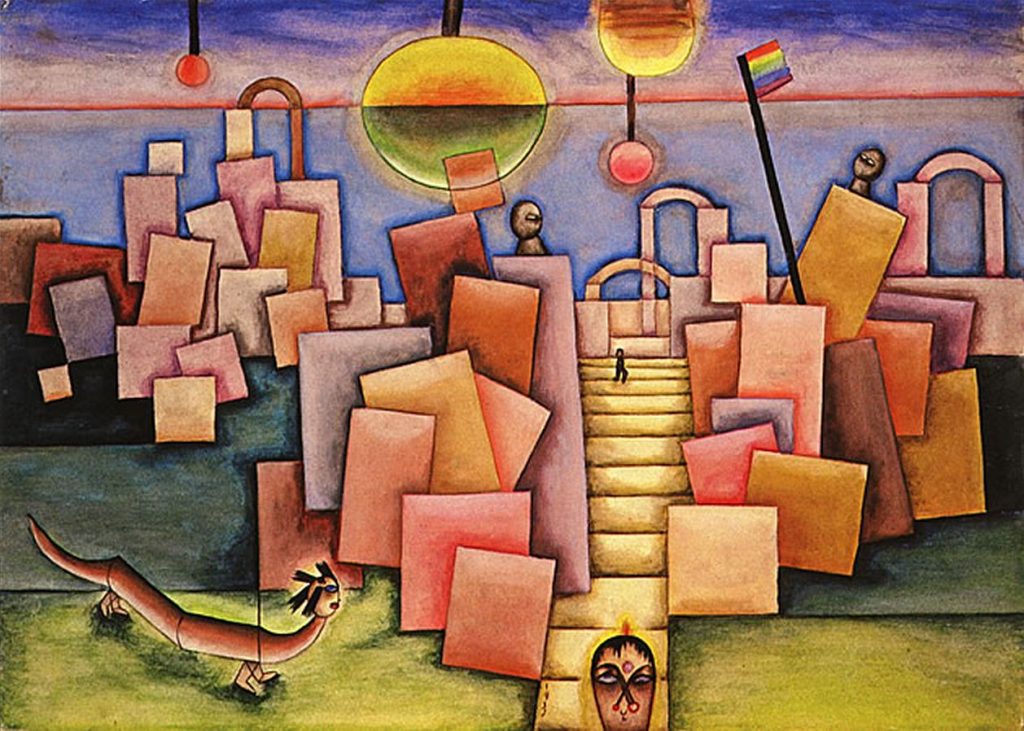 En su pintura se puede apreciar, la técnica de grafito sobre acuarela. Los elementos aparecen superpuestos pero se ve una armonía visual en su totalidad. Utilizó una paleta restringida, es decir, pocos pigmentos pero sin embargo hizo uso del blanco dando luminosidad al cuadro. En la obra, San danza, solo vemos, amarillo, azul, rojo (colores primarios) y negro. Se puede apreciar: la reducción de colores a la que se le denomina “paleta reducida”. Los personajes se asemejan a títeres o muñecos dispersos y en movimiento sin estar sobre soporte alguno. Xul tenía cierta afinidad con estos personajes ya que se repiten en sus obras, a los que él llamaba el Teatro del destino. En movimiento pero siempre utilizando sus formas geométricas abstractas, sin volumen alguno. Los mismos, tienen el contorno cerrado. Hace uso de las luces y sombras, sin embargo la obra se la clasifica con planimetría. En las obras de Xul, abundan las banderas. Siempre están presentes. Son emblemas de la paz y no portavoces coloreados de nacionalismos. Son símbolos de alegría creadora y entendimiento entre los hombres de todas las latitudes. Podemos nombrar a su obra como la simbología esotérica, como una manera de expresar su espiritualidad tan marcada, animaba su vida, que es misteriosa para poder entenderla en su integridad.
Conoce también… Diego Rivera… más allá del arte visual

 [:en]Oscar Agustín Alejandro Schulz Solari, or Xul Solar, his artist name, was born on December 14, 1887, in San Fernando, Buenos Aires. In 1912, his relationship with Europe was enriching because he became familiar with the artistic world. He travelled to Florencia and met Emilio Pettoruti (1892-1971), his dearest friend who influenced his work. Once Xul arrived in Argentina in 1924, his horizons expanded, and not only he was a painter, but he also worked as a writer, translator and notes illustrator, astrologer, mathematician and so on. He became friends with Borges.
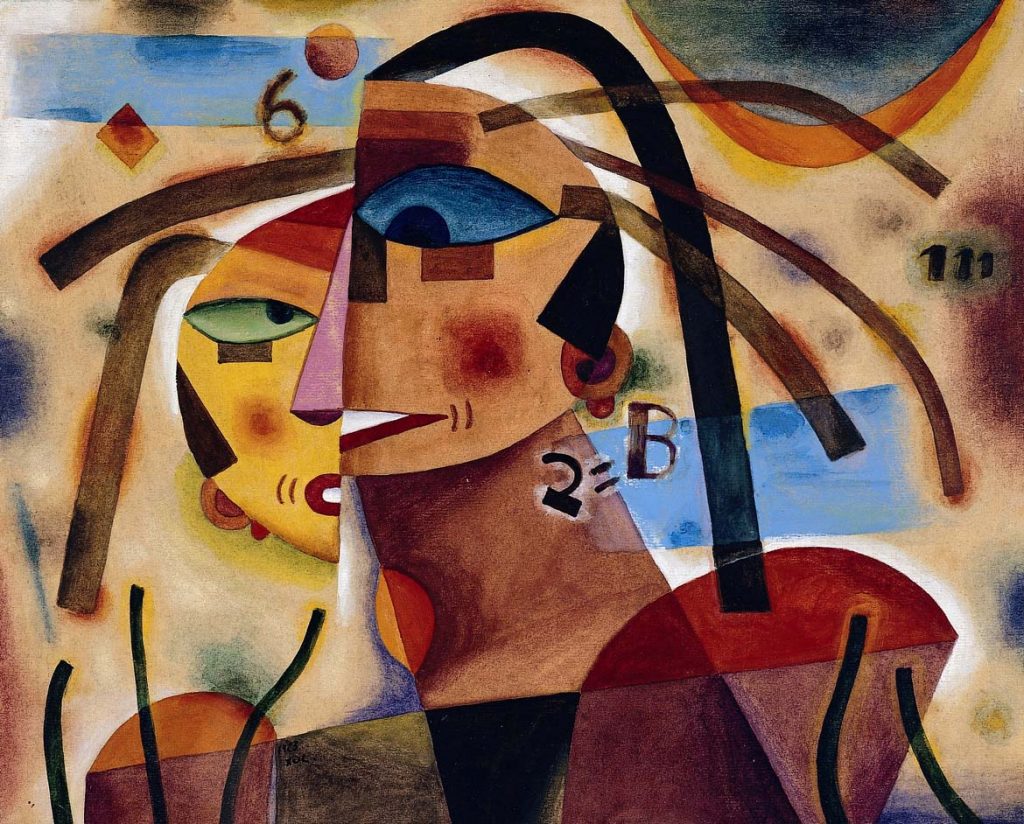
In his paintings, we can see graphite pencil technique on watercolor. The elements seem to be overlapped; however, they are completely visually harmonious. He used a limited palette, in other words, just a few pigments including white, which brought brightness to the painting. In this piece, called San Danza, we can only see yellow, blue, red (primary colors), and black. The artist cut down colors which is known as “reduced palette.” The characters are like scattered moving puppets or dolls which have no support. Xul liked these characters because they were always part of his work; thus, he named them the Theatre of Destiny. They were constantly moving, using their bidimensional, abstract geometric forms which borders are closed. He draws light and shadow, but the painting is classified from planimetrics’ perspective. In Xul’s pieces of art, flags are abundant, they are always part of it. They are peace symbols, not speakers painted with nationalism. They are symbols for creating happiness and understanding among humankind around the world. We can call his work esoteric symbology because it’s a way of expressing his noticeable spirituality, which helped him live happily. His life was mysterious to even try to understand it fully.
You may also like… Diego Rivera…more than visual art


